

WAIT - the Art and Science of Delay
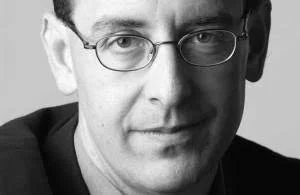
In his work as an investment banker, Frank Partnoy (he’s also law professor at Berkeley) became a student of the timing of decision making. He talked to the neurologists and behavioral psychologists who have taken high-speed film of tennis players, cricket players and professional baseball players - super fast athletes - and learned they paused for a fraction of a second before swinging the the racket and baseball bat. He expains the implications for decisions on every day life.
TRANSCRIPT from TranscriptLOL. Check against audio to be sure it’s right.
Frank Portnoy
The Conversation, August 19, 2013
Ross Reynolds
From KUOW 94.9 Seattle, I'm Ross Reynolds. How does our mind work? How do we decide? What aspects of our mind prevent us from making good decisions? There's been a lot of work on decision-making in that field by neurologists and psychologists, but you know one aspect of decision-making has gotten less scrutiny, the question of when to decide and when to wait. Enter Frank Partnoy. His new book is called 'WAIT - the Art and Science of Delay'. His background is as an investment banker and corporate lawyer, fields where when to decide is a crucial question, but he's also studied the research on decision-making and spoken with neurologists and behavioral psychologists to come up with this. Frank Partnoy, thank you so much for being with us. I appreciate it.
Frank Partnoy
Thank you so much.
Ross Reynolds
So one would not think that a professional tennis player who has a 100 mile per hour serve coming at them in less than a half a second is going to be someone who's going to delay a decision. But some of the research shows that they actually do.
Frank Partnoy
This was one of the most striking things I found in my research, that neuroscientists who have taken high-speed film of tennis players and cricket players and professional baseball players, super fast athletes, who are acting in a pre-conscious way, this is less than 500 milliseconds that they have to hit a ball, are actually not good because they're fast, they're good because they're slow. It's the exact opposite of what we learned as kids. But essentially what they're doing is getting fast, getting better at their return stroke, practicing in order to free up time to process more information about the speed, flight, and trajectory of the ball.
So we just watched the end of Wimbledon, and we watched these remarkable returns of serve over and over again. And what Peter McCloud, a neuroscientist at Oxford, has found is that within that, say, 500 milliseconds that a tennis player has available to return the serve, if they're able to compress their return to get just an extra 50 milliseconds of information about the ball, that that will distinguish a top professional from an amateur, just 50 milliseconds.
So there's a slight pause as they see the racket hit the ball. That's all the time they have, really. But they can calibrate from that just a fraction of a second before they actually begin to move.
It's really incredible that they're able to do this, and they're able to do it all pre-consciously. And one of the things that I do and wait is try to argue that what they're doing is actually a model for what we should do in all of our decision making, that we should first think about what time world we're living in.
So the first question for a tennis player is, I have 500 milliseconds. The most amount of time I can take is 500 milliseconds. If I take 600 milliseconds, the ball goes by. I've blown it.
And then the second step is once you figure out what time world you're living in, whether it's a second or a month or a year, that many people are often better off and happier and make better decisions when they wait until the last possible moment within that time period.
Ross Reynolds
I would think with a tennis player, they can't be thinking about that as much as just realizing that something about what they do in that half second makes them more successful or less successful. And it is, in fact, that pause for just a moment. Now, this applies to individual financial decisions. You cite studies that show how acting immediately on recommendations from the popular stock market show Mad Money with Jim Cramer can be losers, if you go right away with what Jim says. What's come out of that?
Frank Partnoy
We have all kinds of bad snap reactions to investment advice. And if you watch that show, Mad Money, it's tremendously entertaining. Jim Cramer is very smart and colorful, and he throws things and gesticulates wildly.
Ross Reynolds
It's got all the sound effects.
Frank Partnoy
Exactly. And it's a lot of fun to watch. But one of the things that scholars have found is that if you follow his investment recommendations, you end up buying at a higher price after his recommendation, because the stocks he recommends go up by on average more than 2 percent, on average about $77 million on that first day.
But then those gains are reversed over time, and you end up, for example, if you buy the top quintile, the highest-performing stocks that he recommends that go up the most instantly, that you buy at the highest price, That, over the course of 50 days after that, you'll actually lose almost 30% relative to the market. So, although it's a very entertaining show, you don't want to snap-react to Jim Cramer. And it's a point more generally about day trading, people who actively trade their investment portfolios, who respond to news.
in this crush of technology with email and social media and 24-hour news and people are watching CNBC all day and thinking about stocks all day, that that's a recipe for disaster. That what people should be doing is taking a step back and understanding that we're hardwired to react to these kinds of stimulus, but we're worse off when we do.
Ross Reynolds
And it also applies to larger financial decisions. I was intrigued by a story, I think, on 60 Minutes about an investment firm that moved their computers to be closer to the stock market computers to gain just a fraction of a second in their trades being much quicker. And they thought, oh, faster, better. We're going to make more money.Turned out not to be the case.
Frank Partnoy
It's an incredible story. I go through it in the book about UNX, this high-speed trading firm. High-frequency trading is incredibly common. It's 70 percent of the trading in the U.S. stock market.
It's computers basically at war with each other, these complicated mathematical algorithms. And you would think that faster would be better in that world, but one of the things that UNX learned, because it first set up shop in Burbank, California, two blocks east of the Five, And found that a 65 millisecond delay was about the right amount of delay for them. And then when they moved, even at the speed of light, it takes a while for signals to travel through fiber optic cable to New York.
So when they moved to New York, they sliced their trading time in half, but they got worse. And they were able to figure out, oh, 65 milliseconds for our world turns out to be the right amount of time. And the intuition, you're about to ask why.
Ross Reynolds
Yeah, why?
Frank Partnoy
It sounds crazy, right? But the intuition is, there are a lot of things that we don't want to do faster. Sometimes there's a first mover disadvantage. If there's a feral cat around, the first mouse does not get the cheese.
The second mouse gets the cheese, right? And in things like, if you want to send a package to someone, you don't want to pay extra to have it arrive at 8.59 AM instead of 9 AM. If you're sending out a sales force to make calls on clients, And you can just send them in the morning. You don't want to have to pay for a hotel room.
If you're a telecommunications company, people listening to us right now will not perceive a delay of about 150 milliseconds. Well, we could pay to speed that up to 20 milliseconds or something maybe even faster. But why would we do that? There's some kind of optimal amount of delay.
And the really strange thing in the markets is that these computers are kind of faking each other out in a way.
Ross Reynolds
Sometimes you talk about the faint purchase, the sort of fake purchase to get someone else to jump in.
Frank Partnoy
Isn't that miraculous that these programmers who program these computer algorithms are programming them to initially put in things sometimes that are called stub orders or fake orders. They might pretend that they want to buy when really their strategy is to sell. It really is like a war for those first few milliseconds. So imagine going to an Easter egg hunt and getting into the fray at the beginning.
Sometimes you really don't want to be in that fray, and if you think there'll be some eggs left over, maybe you should wait for the fray to end.
Ross Reynolds
So Frank Partnoy makes a trade, and I see it, and I go, oh, bang, and I jump on it. But Frank's just doing that to fake me out.
Frank Partnoy
And humans did this strategy. I used to work in investment banking, and I've written about some of the strategies that were used by human beings at slower speeds over the course of seconds or minutes, faking each other out. And one of the miraculous things now is that computers are doing exactly the same thing, trying to fake each other out at the speed of milliseconds.
Ross Reynolds
We're talking about waiting. Frank Partnoy's new book is called Wait the Art and the Science of Delay. Now, your basic thesis that you've also already given to us is that in this fast-paced modern life, we tend to react too quickly. But I gotta say, it sounds like a pretty sweeping conclusion given the billions of decisions people make every day.
How can you conclude generally that I should take more time to make a decision? How could you really know that in a factual way?
Frank Partnoy
Well, the subtitle of the book is The Art and Science of Delay. So I can't tell you with precision that you always should delay x minutes or y hours. But one of the things that emerges from the research, particularly over the last few years, is that people are often better off and make decisions when they delay in all sorts of different contexts and all sorts of different time frames. And it's very counterintuitive.
So I'm not trying to make the claim that it's always better to delay. Certain kinds of procrastination are bad. But I think procrastination has gotten a bad name. And researchers who study procrastination in detail distinguish between active procrastination, where you're thinking about what it is you're delaying, and passive procrastination.
So I'm not advocating being lazy. But in all sorts of counterintuitive instances, delay is better. So I'll just give you one example, which is apologies. So we're taught as children, you should apologize right away.
If you do something wrong, say I'm sorry right away. And in some contexts, you should apologize right away. If I spilled the water I have right here on you accidentally, it's a simple act. It was unintentional.
I should apologize right away. But researchers who study apologies have found that snap apologies are not as effective as apologies that are delayed as long as possible.
Ross Reynolds
Now, why would that be? We always hear, apologize right away, get it out of the way. Give me an example of why that might not be the right decision.
Frank Partnoy
There are really two reasons why. The first reason is that if you delay your apology, you give the aggrieved party an opportunity to process information about what it is you've done, in the same way a tennis returner who can free up time can process information about the ball. They can learn the details about what exactly you did, who was involved, why you did it. get more knowledge about your apology, so that when you finally apologize, you'll have taken into account that, and they'll know all this information.
Well, and that's the second thing. The second benefit, actually, that researchers find is that getting mad is important, that one of the things that you want to happen with an apology is for the person you've wronged to have a chance to vent. Whether it's if it's a spouse, if it's a co-worker, you need to give them the opportunity to yell at you and to vent. And if you apologize after that, research shows, the apology is much more effective.
Ross Reynolds
So if I get this straight, like if you apologize right away and they haven't had a chance to process that terrible thing that you did as much as they should have, they might just let the apology slide by, but they still might be mad at you because they didn't have a chance to vent and really appreciate what had gone wrong and why?
Frank Partnoy
Yeah, that's right. And both of those things, the research shows, are important. And it's counterintuitive, because we're hardwired to want to act right away, and we're taught to act right away. The book is called Wait!
Ross Reynolds
The Art and Science of Delay. The subtitle, The Art and Science of Delay, where's the art come in?
Frank Partnoy
The art comes in from the fact that you cannot be precise about how much to delay. So even in the high-frequency trading example that we talked through, for a certain period of time, 65 milliseconds was the right amount of delay. I talked at length to the chairman of UNX, Andre Perold, the head of Harvard Business School's finance faculty, and the CEO of UNX. And they said, you know what? 65 milliseconds isn't the right time anymore. We've got to gauge how these computers have changed. Now, it's a little bit faster. Same thing with apologies.
Same thing with our reactions to other human beings going out on a first date. The military is very good at using timing, but they aren't precise about it. They understand that there's an art and there's some expertise that you have to develop in order to know how long to delay. So there's no way that we could specify to the second or to the millisecond exactly how long you should delay in every case.
Ross Reynolds
This must be really useful for negotiators. The old saw is, wait for the other person to make the first offer. Don't do it first. So delay is kind of a commonplace thing and advice to making negotiations.
Does that come into play in your research, too?
Frank Partnoy
Absolutely. Absolutely. In negotiation and in sales, if you ask great salespeople, this is exactly what they do. And they will get to the point where they are giving their closing question.
And they say, if I can overcome all of your objections, is there any reason why you wouldn't buy from me right now? And once you say that, you stop talking, and the next person who speaks loses. And in fact, I talk about a friend of mine who's an incredibly effective salesman who one time was selling a piece of water purification equipment and was sitting with an elderly couple on their sofa after he gave his closing line, and he waited for a full hour, just sitting politely.
And then they finally spoke, and they bought.
Ross Reynolds
Has this research on this book, Frank, changed your personal behavior or your work behavior?
Frank Partnoy
It has changed my behavior. I am a procrastinator of sorts, but I was feeling very much under the thumb of technology and the relentlessness of email in particular. And now I think I'm much more focused on the time period question, the first question we talked about. What is the maximum amount of time I can delay before responding to something?
And some people don't like it at first if I don't instantly respond to an email. And if it's important, I will instantly respond. But for a lot of messages, for a lot of tasks at work, I am much more likely to sit back and think about how long it should take.
Ross Reynolds
So am I reading you right when I say the science is knowing that you should delay, the art is figuring out how long to delay?
Frank Partnoy
Yes, I think that's fair. A lot of the science is about our hardwiring and biology. There's some very interesting pre-conscious biological reflexes of sorts that Interestingly, haven't been featured in the behavioral economics and psychology literature. There are all these silos of knowledge out there with respect to our decisions.
And although we've learned a lot about how we make decisions and why and what kinds of decisions we should make, there hasn't been a lot of scholarship or focus on when.
Ross Reynolds
I want to go to Pam. She's listening to us today. And Pam, it sounds as though you apply the art of delay to your kids.
Pam caller
I have. I've learned to do that. I grew up as a kid in the fifties and when I was a kid, you know, you had certain rules and you went by those and your parents told you when to be home and all those things have changed over the years. And now there's a sense of urgency to even the simplest things such as the email.
And I find that when kids get in an age of, say preteen, everything that relates to their peers and their life becomes so urgent.
Ross Reynolds
So you've got a 90-second rule? What's that?
Pam caller
Well, my 90-second rule is that if a kid asks a question and I'm not sure about it, I don't have the information, I wait ninety seconds before I answer, which seems like forever to them.
Ross Reynolds
And I like that a lot. Hey, thanks a lot for your phone call. I really appreciate it. And Frank Partnoy, thank you so much for coming by.
I'm Ross Reynolds and this is KUOW 94.9 FM