

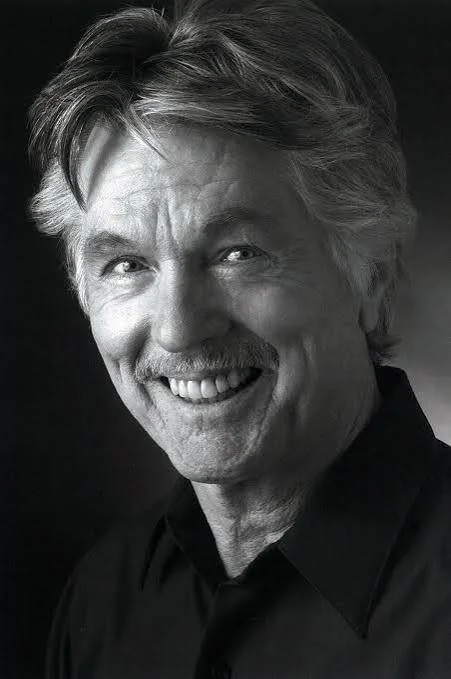
Tom Roy Skerritt (August 25, 1933 – October 21, 2026) was an American actor and director who appeared in over 170 film and television productions between 1962 and 2025 including Robert Altman's M*A*S*H (1970). The Turning Point (1977), Alien (1979), Top Gun (1986), and A River Runs Through It (1992), Picket Fences (1992–1996) and the sixth season of the sitcom Cheers (1987–1988).
But alongside his heavyweight Hollywood credentials he was a long-time Seattle resident who worked in the local theater scene and programs designed to help military veterans. We talked about it all in this 2012 interview.
TRANSCRIPT (NOTE: It’s AI and not perfect. Check agains the audio. Note the time cues in parenthesis.
Ross Reynolds
(00:00) From KUOW 94.9 Seattle, I'm Ross Reynolds. You've been living under a rock if you haven't seen Tom Skerritt in something. From TV appearances on The Alfred Hitchcock Hour, My Three Sons, and The Fugitive in the 60s, to major motion pictures like Alien, Steel Magnolias, Top Gun, and Turning Point, A River Runs Through It. Tom Skerritt debuted as a film actor in War Hunt, an independent 1962 anti-war film that also featured some people you might have heard of Robert Redford Sidney Pollack were in it and also an uncredited Francis Ford Coppola Tom won an Emmy Award for Best Actor and his role
(00:32) in CBS's Picket Fences Comedians Tim and Eric even came up with a jingle for Tom Skerritt Skit skat skerritt I want Tom Skerritt I need Tom Skerritt I love Tom Skerritt Actor and Seattle resident Tom Skerritt along with his jingle love that Will you dig up all its obscure stuff you is funny? You're in the video and they're trying out all these funny.
Tom Skerrit
(00:57) Oh, you've got a total deadpan Oh, I know it was fun to do that. We did it variety of ways.
Ross Reynolds
(01:03) But yeah, that was a lot of fun It was a lot of fun to watch to congratulations on your 79th birthday recently.
Speaker 1
(01:09) Oh
Tom Skerrit
(01:10) You had to bring that up.
Ross Reynolds
(01:13) Well, I bring that up, but I hasten to mention that you've got a very active career. I was looking back over your credits, and it's not as though you're slowing down.
Tom Skerrit
(01:21) No, as a matter of fact, I'm probably busier now than I have been in years, but it's not in the acting of making a transition to this community, which I feel very strongly about. I have long felt that we're on the cusp of being the cultural center of the West Coast, and we're a little shy about accepting the responsibility for that.
Ross Reynolds
(01:40) And I want to talk about that, too, and a lot of your work with the film school and some of your other work with veterans. But let's talk a little bit about your career. Having such a number of, in every decade, you've appeared in great parts, in great motion pictures. And I know the job of an actor can be very uncertain and a lot of wondering where the next role is going to be and is it going to be any good.
(02:02) And I'm kind of wondering if, with your long career, was there some point at which you went, you know, Tom Skerritt has it kind of knocked. I'm pretty sure I'm going to be able to do what I want to do as an actor.
Tom Skerrit
(02:12) You're always looking for a job in jobs, first of all. That I've had the offers over the years to be in would basically come down to classic films. Those things that you can see 20 years later and are still relevant. It's just a stroke of good fortune.
(02:31) From my standpoint. I'm just people ask me. What was my favorite experience? I will say that mash was the most enjoyable I've never had some more fun in my life But I will say the whole thing is just that I've been able to be fortunate enough to have The career that I've had isn't quite enough.
(02:50) I
Ross Reynolds
(02:50) I've heard you say that before. You had the most fun on M.A.S.H., directed by Robert Altman. But there's a famous story about how the other stars in that film, Donald Sutherland and Elliot Gould, got so freaked out by the way Robert Altman was directing the film, they even went around behind his back and tried to get him fired. You have to remember, this is early in Altman's career.
(03:08) How did you react to the way that Altman was directing that film, which I understand was with a lot of improvisation?
Tom Skerrit
(03:14) I was mentoring with Altman for a number of years, so I understood what he was doing, I knew what he was capable of. He talked a lot in dailies, watching films, he would teach, tell me about how this and how that, and then how he deals with people. Elliot and Donald really were on, they're on the rise at that time. I was brand new, so I was sort of ignored, but I was the one that was sort of between both parties, seeing they didn't like Altman, Altman didn't like them, but Altman understood he had to use whatever they were bringing to it in their distaste for what they
(03:57) were doing or what they were involved with. And he did that by not necessarily letting them know where the camera was gonna be focused.
Ross Reynolds
(04:06) or having microphones everywhere.
Tom Skerrit
(04:08) So I think it was disorienting for them. Should I be saying this or that? Is the microphone here? Those things that we commonly expect, that we've got to be on our best when the camera's on us or the microphone is hot, they frankly did not understand.
(04:28) You just got to get up like a stage performance and hook into something and go for it.
Ross Reynolds
(04:37) They've got this game, Six Degrees of Kevin Bacon, and I'm thinking, they totally missed the boat, if they did Six Degrees of Tom Skerritt, I think they would cover the entire universe. One looks back at all the films you're in, as we were talking about you being on today, someone would say, oh, and there was this, and there was that, and there was the other thing. MASH, your most fun film to work on, just talk about one other movie that you've been in that you really thought that you did a good job or you felt really great about the film.
Tom Skerrit
(05:05) I'm not objective enough to say I did a good job. I always see improvement as necessary. It's really a very healthy position to be in as a creative person. You're never satisfied with, which drives you on to be better.
(05:18) So that's really not so much the issue as the, looking back, basically the places we were, the people we met, are more important in terms of what you become that adds to your career later on. But I will say, on a spiritual level, something that has touched me every time I see it, and I don't see films that I do necessarily, or I certainly don't see them more than once, but I've seen a river runs through it. on several occasions to promote it. And each time, objectively, I was deeply moved by it, but in a different way.
(05:59) So that was great poetry, great film poetry.
Ross Reynolds
(06:03) It's a terrific film and memorable to me as a fly fisherman, the amazing shots of the fly fishing on the river, which even if you're not a fly fisherman, it's just kind of a beautiful thing to see visually. But I understand that People took you fly fishing or kind of surprised to see that you weren't that great of a fly fisherman. Is that true?
Tom Skerrit
(06:25) Well, I don't know about that. I caught a fish. I'm better now than I was then. That was the first time.
(06:32) I'd never really done that before.
Ross Reynolds
(06:34) Well, Tom Skerritt, you're not somebody who just hangs your hat in Seattle and flies in and out to do your film work and your other work. You are very much a part of this community. First of all, how did you get to Seattle back in 1988? It doesn't seem like a classic move for an actor who already had quite a reputation up to them to move to the Pacific Northwest.
(06:53) What brought you here?
Tom Skerrit
(06:53) I went to UCLA to be a filmmaker back in the 60s, and I've always felt, I mean, LA was, to me at that time, a place architecturally, I have a thing about, you know, when you drive through a community, that becomes a part of, your input becomes a part of you, and Los Angeles had that about it and its architecture that you could fold it up and move out overnight. I think that's a lot of that in its personality as well. It's hard to say what is really the soul.
(07:30) We know what the superficial aspects of Los Angeles are, but the soul of it is so malleable and so it goes from fad to fad in some ways. I'm not knocking it necessarily because we don't know too many good people down there. who lived there. But being here was a matter of I came up here in the early 70s, I'll go through this quickly for a holiday, went out in the forest, my brother lived up here with his family, went in the forest to look for a Christmas tree to drag home and
(08:02) it was wet and it was cold and my feet were soggy and freezing and the sky, the setting sun was just ice, a sheet of ice with a light shining through it. Got that tree back and I was in love. I knew this is a place I had to be and that was the early 70s. And I went into a little, you know, coffee shop somewhere and they were playing John Coltrane.
(08:24) I said, oh God, this too? So I bought a place on Lopez Island in 1980 and just coming up here and driving through the neighborhoods and feeling a sense of I don't want to say purity, but it was a very clearing experience being with people who had their feet on the ground, had a focus, had a sense of community, very strong sense of community. And I think maybe that's what's lacking in LA to some extent, a sense of community.
Ross Reynolds
(08:54) So that determined my being here and just took time. Actor and activist Tom Skerritt is my guest. One of the things that you're currently working on is you're teaching storytelling to post-traumatic stress disorder victims coming back from Afghanistan and Iraq down at Fort Lewis. How does that help them?
(09:15) What do you do with them?
Tom Skerrit
(09:17) What struck me about this, and I've been concerned about the numbers and the inability of the Army to really bring them back for about four years, and what they do is, and what the Army has to do, because it thinks the way it does, is more intellectual than senses. My sense of storytelling, because I started a school 10 years ago here called the Film School, from which we have almost 700 alumni, 85% of them say that we have changed their life. What struck me most was we are giving people self-esteem.
(09:57) We're giving people themselves. That's a big deal. And you don't write good material, lyrics, poetry, anything else, unless you really feel good about what you're putting out there. That struck me as a good idea to take down the post-traumatic stress vets.
Ross Reynolds
(10:15) So you get these vets to open up and tell the stories of maybe the traumatic events that led to their injuries? No, no. Avoid that.
Tom Skerrit
(10:21) Where do you go? They don't want to go there. They're dealing with that in the Army. What was your childhood like?
(10:29) It's a phenomenon that they get into. laughter, singing songs, getting stupid, getting silly, laugh at each other, feel comfortable with yourselves in order to feel comfortable with other people. If you're going to go back into civilian life, if you're going to get a job and there are those non-profits that are looking for jobs for vets, these guys are I'm not going to be able to stay at a job if they have this condition that surfaces unexpectedly over something or other, a sound, whatever it is.
(11:02) So it seemed to me to make sense of just they got to get comfortable with themselves before they can go back into civilian life.
Ross Reynolds
(11:07) How hard is it to get them to open up and tell those stories? And does it help that you're a well-recognized film actor when you show up to get them to try to do that?
Tom Skerrit
(11:16) Well, I'm sure that is something the first day. But the first day, I give him joke books to tell him, knock-knock jokes, hey, your mama jokes, all this sort of thing. So they have to stand up and tell these jokes. We had them laughing the first day.
(11:34) The second day, we get into doing improvisational work. Get up and pretend you're a cop, and this is a guy in a hood, and you're trying to deal with each other. So to begin to feel what it is to be in a situation, given that you have this character, that character, and the world's exploding around you, not in battle. We don't do the kid in a hood thing.
(11:57) I shouldn't say that because that could be too active. But what we do try to do is point toward the most positive aspects of it. Have them write a scene about your favorite uncle and the chocolate pudding that he made that you loved every Christmas when you went over there. Whatever happened to that guy.
(12:14) You know, all those things that are favorable in their lives, all those things that made them feel comfortable then can make them feel comfortable now. But don't deal with the army thing. That's not what you're here to do. Not to tell that story.
(12:28) That story that you tell comes from your feelings, from your heart.
Ross Reynolds
(12:31) Let's get back to that and then that's how we define ourselves as the stories we tell about about our lives you mentioned the film school that you helped establish in 2004 where you got a lot of these ideas that you've used in working with these veterans and it was set up to improve the quality of film scripts that were being written what was Lacking from them that you wanted to address with the film school.
Speaker 1
(12:53) I
Tom Skerrit
(12:53) Just lack of work, really. I had been seeing a lot of films that were being made here by local people. We have more people making films here than anywhere else. They hadn't really determined how much work they should be doing on the material.
(13:10) My thinking is that it can take you a year or two to get to a point where you have a feature-length script that is worth showing anyone. On the other hand, we're also realizing now the value of shorter films. Well, first of all, things change. You have to be flexible in this kind of new educational system that we're pursuing.
(13:33) We had just simply get in touch with yourself, trust yourself, believe in yourself, come from the heart, come from that place that touches you most. And then these are the rules about storytelling. The react structure, here's how to build a character. But most of all, it all has to come from how you feel about yourself and what you recognize as the value of those things.
Ross Reynolds
(13:57) I'm interested in this class that you teach called On Your Feet. It seems designed to get the writer away from the idea of the screen to actually seeing and feeling what those words are like when they're out there. What is that class and how do you do that? Maybe you can give an example of a scriptwriter who participated in the On Your Feet class and changed something because of their experience there.
Tom Skerrit
(14:17) Again, it's an intellectual thing, writing, as is the psychiatric treatment of the soldiers. It's intellectual. We're far too intellectual in a lot of ways as a society. But if we're going to be in a creative medium, we damn well better be more real in terms of how we express ourselves, and with this on-your-feet situation, well, we've got people who are intellectualizing, coming in, trying to sort it out.
(14:44) How do we do this? How do we do that? And I say, just forget all that, just get on your feet, write this material, two-page scene, two people, and give that script to somebody, this guy over here to direct, and these two people to act. You're not gonna say your own thing, you're gonna be acting or directing in someone else's thing.
(15:04) So you get a sense of what that is in doing it. Not in analyzing, all that stuff is just out the window. You've got to just put your foot down and trust that your impulses are gonna be there. It's like if you see a car coming at you, you've got an instinct to move out of the way.
(15:23) That's not thought through. That's just trusting that you're making the right move to get out of the way.
Ross Reynolds
(15:31) You've had a chance to see the local film community grow and get larger and more sophisticated over the years in many different ways. When you take a look at it today in 2012, where do you see the strengths and where do you see the places that you could get shored up where it could be better?
Tom Skerrit
(15:46) The strength is, first of all, we've got the largest truly independent film festival in the world in CIFF. So we're going to see films that you can't see anywhere else. Films that are going to reflect everything that we're trying to do in terms of good storytelling, good characterization. We're the only ones that are gonna see a lot of these films.
(16:06) They're coming from Bolivia or some country where it's foreign language and we don't, the major studios or systems don't really, they don't put these in a distribution system mainly because they don't make enough money, unfortunately. But we have that. It's created the largest and most sophisticated film audience in the country. We know that in North America.
(16:30) And with that, all these young people that want to come out of that saying, gee, I can make films. And plus, you can do it for nothing with all the equipment, the technology we've got here. So let's go with that. The strength is in that.
(16:46) The weakness is in how we implement this by, first of all, above everything else, I keep coming back to everything we're talking about, all the technological advancement, content and storytelling. So, and doing, this is a literate city.
Ross Reynolds
(17:07) Educated yeah, we all we know about yeah, you know, we're just about out of time But if you encounter young people who are interested in film from around the country, would you tell them come to Seattle?
Tom Skerrit
(17:19) Oh, absolutely. There's no reason for Seattle not to be an alternative to Hollywood. We can make films, well-told stories, for under $4 million here. If we do the work, if we really truly believe that, we can do that.
(17:34) And I say an alternative because Hollywood has to make what it makes. They have the infrastructure, they have the system, and that's the way they think. We have a clean table. We can start from get-go.
Ross Reynolds
(17:44) Tom Skarritt, thank you so much for coming by. I really appreciate you taking the time. Our show is produced by David Hyde with Arwa Nix. We get production help from Leslie McClurg, Nick Visser, Christine Biederstadt, and Molly Williams.
(17:56) Andy Hearst is our engineer from KUOW 94.9 Seattle. I'm Ross Reynolds.