

Philip Seymour Hoffman
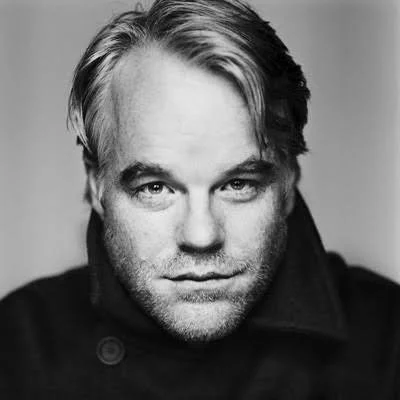
Philip Seymour Hoffman (July 23, 1967-February 2, 2014) was one of the greatest actors of his time. The winner of the Academy Award for Best Actor for the lead role in ‘Capote’, Hoffman always delivered distinctive, striking characters in a variety of roles. I had the chance to chat with him about his directorial debut in ‘Jack Goes Boating’ on KUOW’s The Conversation September 23rd, 2010.
TRANSCRIPT Note - AI did this transcript so check against the audio file before quoting it.
Ross Reynolds
Two couples, one coming together, another falling apart, are at the center of a new film called Jack Goes Boating. Philip Seymour Hoffman plays Jack. He won an Oscar for playing the title role in Capote. (11:24) Jack Goes Boating is his feature directorial debut. (11:28) He also appeared in the stage version at the Labyrinth Theatre Company in New York, where he's the co-artistic director. When I spoke to him last week, I asked him what attracted him to the story in Jack Goes Boating, so much so that he acted in the play, directed the film, and starred in it.
Phillip Seymour Hoffman
It's hard to put your finger on it. We did a reading of the play and it just had this quality of something something kind of cataclysmic about life happening in this very small tale about working class people. Something big was going on, even though what would seem to be happening was quite simple. And that big thing is that people need each other and that that actual interaction or relationship or friendship or romantic love affair, all the different ways relationships take a form, is one of the hardest things we do in our lives.
It's one of the biggest risks we'll take in our lives. You know, everyone thinks we'll risk it in a career or risk in these things or the big decisions are made politics. But none of those things would even exist without two people actually getting into a room together and saying, I would actually like to share my time with you and let you know who I am. And this film really is touching on that.
that theme, because it's not just a romantic comedy about a man and a woman getting together. It is definitely trying to go at the fact that if you say yes to someone, I will, that you are also saying, I will be hurt by you. Because you can't have relationships if you're not willing to be disappointed and hurt by that person. It's almost impossible.
And that kind of, you have to be able to enter into the world and realize that the richness of life is all the good and joy and thrill of it, but also all the disappointment, hurt, and heartache of it. And that all of that is what's great. ) And that we have Jack and Connie, who are two people that have said, no, I'm not willing to take that. And now this story is about how they do.
Ross Reynolds
Phil, I'm glad to hear you mentioned the working class characters. You guys are limousine drivers. The other characters work in offices. And watching the film, I was thinking how relatively infrequently you're seeing films like that about working class folks. I wonder if that was part of the attraction to you.
Phillip Seymour Hoffman
That is part of the attraction and staying true to that. You know, I think that something I was concerned with and didn't want, you know, is to make these people like quirky, weird, oddball kind of movie characters, you know. I talked a lot about, no, don't judge these people.
That stuff wasn't easy. What an interesting thing to take it from a play to a movie, because, I mean, what a different experience. (16:11) The play starts, and you're going to go straight through, or at least to the intermission. (16:14) And moviemaking is so stop, start.
It seems like it would be hard to get your concentration together. Well, that's a different experience.
Phillip Seymour Hoffman
But that kind of thing is like, that can sometimes be a great thing. Because some scenes are really, really hard. And if you know you just have that scene on that day, you can really prepare for it and give it your all for three or four hours you're shooting it. We're in a play you know a run of a play can be a real nightmare sometimes where if it's you don't get off on the right foot and you're constantly like going back you're constantly like oh my god that scene that scene that and then all of a sudden 10 scenes you've screwed up and the show ends you're like oh i'm going home you know and so in a play you have to learn the skill of that's gone this is now.
Where in a film, it's like you could start out and you could just be so bad and just be like, and just fight. You can fight and work and make it happen.
Ross Reynolds
Philip Seymour Hoffman, he won the Oscar for his role as Truman Capote in the film Capote, and he starred in and directed this new film called Jack Goes Boating. He says he would like to direct another movie, but one that he doesn't have to act in. (17:30) Bob Glaudini wrote Jack Goes Boating for the stage and adapted that play for the screen. It's going to be opening in Seattle on September 24th.
It's got a terrific soundtrack, including music from Seattle's own Fleet Foxes.
“ I was following the eye, was following the eye, was following the eye, was following the eye, was following the eye, was following the eye, was following the eye, was following the pack all swallowed in their coats with scarves of red tied round their throats to keep their little ( heads from falling in the snow and I turned round and round and there you go”
Ross Reynolds
White's winter hymnal from the Fleet Foxes, and that is in the film Jet Goes BoatingThat film is going to be opening tomorrow in Seattle. David Hyde produces our program with Jenny Asarnow. We get production help from Andrew Walsh and Lee Ingalls.