

Fred Armisen & Carrie Brownstein on Portlandia
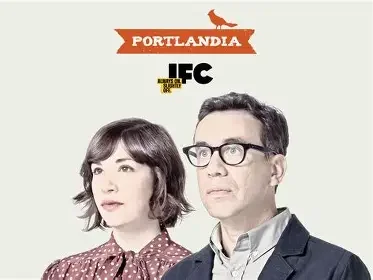
Carrie Brownstein, Fred Armisen
‘Portlandia’ was an affectionate, goofy comedy sketch show about “the place young people go to retire”. It was created by Fred Armisen from Saturday Night Live and Carrie Brownstein from the rock band Sleater-Kinney. In late 2011 they were on a press and public appearance tour promoting the show’s second season and stopped by the KUOW studios.
TRANSCRIPT
Ross Reynolds
It's KUOW 94.9 Seattle, I'm Ross Reynolds. Portlandia is a TV show on the Independent Film Channel that skewers the pretensions of Northwest hipsters. [OPENING OF THE FIRST SHOW]
Do you remember the 90s?
Fred Armisen
Yeah. You know, people were talking about getting piercings and getting tribal tattoos. Yeah. And people were singing about saving the planet and forming bands.
Fred Armisen
Yeah. There's a place where that idea still exists as a reality, and I've been there.
Speaker 4
Where is it? Portland. Oregon?
Speaker 1
Yeah.
Fred Armisen
Remember when people were content to be unambitious, sleep till 11, just hang out with their friends? I mean, he had no occupations whatsoever, maybe working a couple hours a week at a coffee shop.
Carrie Brownstein
Right?
Speaker 4
That died out a long time ago.
Fred Armisen
Not in Portland.
Speaker 1
Portland is a city where young people go to retire.
Ross Reynolds
Portlandia is the Independent Film Channel's biggest hit with an audience of more than 5 million. The creators are Fred Armisen from Saturday Night Live and Carrie Brownstein from NPR Music, Sleater Kinney and her new band Wild Flag. They did a live Portlandia tour and it came here to Seattle last night at the Showbox. This morning I asked Fred Armisen how it went.
Fred Armisen
We really loved it. It was a really great crowd, and we showed some clips from the upcoming season. The crowd reacted so well. We were really happy with it, because we never know.
Fred Armisen
We always just see it in an editing room or on our computers, and it's nice to see it in front of a crowd.
Ross Reynolds
Was this a really different thing for you guys to do on stage? Because Carrie, you've performed as a musician, and Fred, you've done stand-up comedy, and this didn't seem like either of those things.
Carrie Brownstein
Yeah, I mean we didn't know really what to expect from the dynamic from the audience and But because both of us are used to having kind of an immediate reaction when we perform, that's one thing we miss when we make the show. Obviously, it can't be like that. But we wanted some way of translating our enthusiasm for our audience and just our desire to kind of connect with people into a tour. And so far, so good.
Carrie Brownstein
It's really nice to come out on stage and just think, wow, these are the people that watch this show. We want to get to know them just as much as they're sort of curious about us.
Ross Reynolds
So what are some of the characters from season one that reappear and are there new characters that will be coming in, Fred?
Fred Armisen
There's some that reappear. Kath and Dave, this sort of uptight but aggressively laid-back couple. They're both at the same time. They want to enjoy themselves but they have a lot of rules as far as how they want to spend their leisure time.
Fred Armisen
They make a few appearances. Peter and Nance, who are this sweet, syrupy, kind, really socially conscious couple. They were the ones who were on the chicken farm. They reappear.
Fred Armisen
Spike, that sort of bike messenger guy, aggressive bicycle rights guy. Candace and Tony, the feminist bookstore ladies. But then we've got some new characters who, we made an observation that Not that it's a grand observation, but we noticed that there's a new generation of dads who are white-haired, but still have glasses and tattoos and tribal tattoos and drums in their basement, but they're parents. So it's just an interesting mix of generations.
Fred Armisen
And we tried to explore that a little bit.
Ross Reynolds
Carrie, could you talk about how you first began to do the skits that have become Portlandia?
Carrie Brownstein
Sure. So Fred and I met in 2003 and we just for fun started making these little videos online, mostly for our friends and for each other. We just, um, they, the point even wasn't to necessarily be funny. It was just to kind of capture these vignettes, these moments and kind of this awkwardness.
Carrie Brownstein
And eventually we had 10 or 11 videos and They did start to seem like there was a coherency to them. There was kind of a sensibility to them. And I think in order to just keep working together, we wanted to be more pointed and have a little bit more of a sense of ambition. So we decided to create a pitch and try to make it into a TV show, which kind of amazingly, you know, fortunately happened.
Carrie Brownstein
But yeah, I mean, it was a very organic process. It was not unlike, you know, forming a band with someone. So this is my friend. This is someone I'd like to work with.
Carrie Brownstein
And it's super rare. It seems more rare in television to have two people that, you know, it didn't start with any huge idea except to just, you know, work with somebody that the other, you know, that we like.
Ross Reynolds
Well, one of my favorite bits starts, as many of them do, in a coffee shop.
Fred Armisen
Oh, Maggie's running late.
Speaker 4
Okay. Hey, did you guys read that thing in the New Yorker last month about how golf is an analogy for marriage?
Fred Armisen
I did. I did read that. Did you hear the thing at McSweeney's? It was comparing CD tracks and album tracks.
Fred Armisen
Did you read that?
Speaker 4
Yeah. Did you read that thing in Mother Jones about eco-chairs and eco-ways to sit? I did.
Fred Armisen
Yeah. I did. Did you read that thing in Spain about all the festivals?
Speaker 4
Mm, uh-huh. Did you read that thing in Pace? It was about the National.
Fred Armisen
Oh, I saw that. Did you read that thing in Dwell about all the mid-century houses?
Speaker 4
Yeah. Did you read the New York Times? Yes. New York Observer?
Speaker 4
Yes. Washington Post? Yes. Wall Street Journal?
Speaker 4
Of course I read it. Did you read that steampunk article in Boing Boing? I did not like the end of it. Did you read that skywriting over the Willamette River?
Carrie Brownstein
Yes.
Fred Armisen
Did you read that fortune cookie? Yes. From last night?
Speaker 4
Yes. Did you read it? Yes. There were two.
Carrie Brownstein
Yes. Did you read that thing that guy wrote in the sand on the beach? Yeah.
Speaker 4
Did you read the Portland Mercury? Yeah. Did you read the Willamette Week? Yeah.
Speaker 4
Did you read the Seattle Stranger? Beginning to end. Did you read the SF Weekly? I loved it.
Speaker 4
The Harvard Lampoon? Well-written. Did you read Mad Magazine? I did not like the end of it.
Speaker 4
Did you read Kathy? That was cute. Did you read Family Circus?
Carrie Brownstein
Sure.
Speaker 4
Did you read Calvin and Hobbes?
Carrie Brownstein
Sure.
Speaker 4
Did you read the Boston Globe?
Carrie Brownstein
Sure.
Fred Armisen
Did you read the Washington Blade? We read it together.
Speaker 4
Did you read it? Uh-huh. Did you read it? Mm-hmm.
Speaker 4
Did you read it? Of course I did.
Fred Armisen
Did you read it? I read it to a friend of mine. Did you read the closing credits of that movie?
Speaker 4
Yeah, did you read that book, Jack? Did you read it? Did you read the Bible? Did you read it?
Speaker 4
Did you read it? Did you read it?
Speaker 2
Did you read it? Did you read it? Did you read it? Finger writing on the
Ross Reynolds
And what you can't see there is that Carrie and Fred are literally eating the magazine. What was the genesis of that skit?
Carrie Brownstein
Um, that was when, uh, I had had that observation about, you know, this kind of one-upmanship with the phrase, did you read? And it kind of just sat there until this writer, Alison Silverman, who is a fantastic writer. She wrote on the Colbert Report and she, um, worked with us last season. She said, you know, I'm going to take that idea of Carrie's and I'm going to figure this out.
Carrie Brownstein
And she did. And, you know, um, Yeah, it's something that I still find myself saying. For some reason, you always have to say yes, even if you didn't read it. It's just such a challenging question.
Carrie Brownstein
And you just feel like, OK, now we're dueling right now. We're in a full-on duel. But I catch myself saying, did you read? And I've ruined that phrase for myself, I think.
Ross Reynolds
There was a great profile of you in The New Yorker, and Margaret Talbot wrote that Portlandia is an extended joke about what Freud called the narcissism of small differences, the need to distinguish oneself by minute, shade by minute shadings, and to insist, and with outsized militancy, on the importance of those shadings. End quote. Does Margaret Talbot get it?
Carrie Brownstein
Yeah, I do think that there's a certain kind of entitlement and specialness that, you know, people have become kind of obsessed with. And like, I don't know what came first. Like, it's almost like our lives sort of mimic the way that we like set up our computers or the way that technology allows us to kind of curate this interface like oh, I I want to just tune out everything I don't want to see and Like have access to only the news only the pictures only the friends that I want to be with and I feel like There's these certain shops and restaurants in cities like Seattle or Portland or Brooklyn that that kind of recreate that experience, this highly curated, highly specialized experience that when you
Carrie Brownstein
go in, even though the ways of interacting with that store, that restaurant are kind of esoteric or confusing, it makes you feel so good. Like, wow, I feel so special that this has been an arduous process. And that speaks to my individuality. And so, yeah, I think Margaret gets it.
Carrie Brownstein
And that's something that we, you know, a lot of the characters and a lot of the themes on the show have to do with that, that sense of specialness that people really want to feel.
Ross Reynolds
Carrie, you've spent a lot of time in Portland, so it's where you live. But Fred, you're coming from New York City. Was this a foreign culture to come and kind of get the humor about and get this quirkiness?
Fred Armisen
All I know is that I just loved and love being in Portland. So I don't know if it was about making fun of or even capturing any of that quirkiness. I think it was just like I wanted to just reflect it somehow. And coming from New York, I mean, it's not too long of a flight.
Fred Armisen
And to me, they really do go well together. I think that Portlanders are comfortable in New York and vice versa.
Ross Reynolds
Well, certainly if you live in Seattle or Portland or Brooklyn or maybe Austin, these are really recognizable characters. But now that the show's been out there for a while, do people who aren't from those places kind of get it?
Fred Armisen
They seem to. Everywhere I go, people who don't seem like they're from that world will say something about the show. And it's a good thing because I think that the show is really about relationships, you know? It's about Carrie and I.
Fred Armisen
So it's good that that's the thing that seems to really resonate the most.
Ross Reynolds
One of the funniest things about it is that the characters are way not self-conscious at all about their absurdities. And I'm wondering, when you talk to people in Portland about this, are any of them offended that there's a cut too close to the bone for some of them?
Carrie Brownstein
I'm sure that it does. I mean, it cuts close to the bone for myself and for Fred. In some ways, these are just extensions of our personalities or certain kind of nuances that we possess. We kind of heighten them a little bit, and we might access something that we wouldn't access all the time without losing a bunch of friends.
Carrie Brownstein
I feel like, for the most part, people aren't offended. They get it. You know, they think of it as kind of an affectionate love letter to Portland, and also that we're kind of sending a postcard from Portland to the rest of the world. So I don't...
Carrie Brownstein
Yeah. I don't... No one's feathers seem too ruffled, I don't think. But also, I'm...
Carrie Brownstein
I think we all are. We're fine making people feel a little uncomfortable. A lot of the moments that we portray on the show are about discomfort, are about tension. And just in terms of the kind of TV or movies or art that I enjoy, it always is something that creates a little bit of divisiveness.
Carrie Brownstein
So I'm okay having there be a discussion like, this is good, this isn't good, I get it, I don't get it. That to me is more interesting than just something benign.
Ross Reynolds
I've read that you do a lot of improvisation when you're doing this. Have you ever gotten into bits that just were so funny that you had a hard time getting through them because you kept cracking yourselves up?
Fred Armisen
Oh, yeah. That's happened a lot. I mean, we don't get to see any of it on screen, but yeah. There were times also we just sort of made each other laugh and not the crew.
Fred Armisen
So that became less fun for everybody. We would just start laughing. It's a tight schedule. The budget isn't very big, so we have to keep it moving.
Ross Reynolds
You two are really close friends, and now you're really close co-workers on putting this series together. Is it difficult to stay friends and co-workers? Because the criteria for friendship and working together sometimes can be different.
Fred Armisen
No, that chemistry is perfect because we both like working so much. And we need to be doing activities so it actually fits right in. And it's also not work work. It's like goof around work.
Carrie Brownstein
Yeah, and I think also, you know, we don't live in the same city, so the novelty of getting to hang out still exists. There's still this anticipation and excitement, and it's like Fred's my activity-based friend, which are always the best kind. You know, it's like you're doing something together.
Fred Armisen
We might have even built it that way anyway, because that's the only way we could really make plans to just, you know, be together and get to do things.
Carrie Brownstein
Yeah, I mean, we could be racquetball buddies. We decided to make a TV show instead. Plus, I bet you're not very good at racquetball.
Fred Armisen
No, but I can make a good TV show about racquetball.
Ross Reynolds
The two of you are making funny of a city where young people go to retire, but as you alluded to, Fred, you guys seem the opposite of people who are about to retire. You've got two TV shows going, you've got all kinds of activities on the side, you've got a band happening. You guys must be busy all the time.
Fred Armisen
Yeah, and we're busy all the time. But I like it that way. It's good.
Carrie Brownstein
Yeah, I think we both feel very lucky. We've both been involved in things that people didn't care about. The fact that we put something out into the world that people feel a connection to, that people are interested in, we only feel a good sense of fortune and are very grateful.
Fred Armisen
We don't take it for granted.
Ross Reynolds
It looks like it must be a lot of fun for you with the the sex roles you're playing you're you're cross-dressing Kara you get to play a guy and your voice gets dropped and you talk in male tones and you switch Characters all along with these different pairings and these couples that you have. Is that a thought of fun to play that way? Oh
Fred Armisen
Yeah, it's good. It just really expands things a lot. We're able to just find a different voice for saying some of the same things, so it's a lot of fun.
Carrie Brownstein
Yeah, and I feel like you learn so much about yourself and sort of your capabilities and your emotional range. There's this sort of testing ground of real-life dynamics that you can kind of put into these characters. you know, things that I wouldn't be comfortable doing in real life, or things I wouldn't say, or ways I wouldn't interact. You get to explore all that in these characters, and especially in the second season, some of these characters had multiple storylines, so you start to really get to know them.
Carrie Brownstein
And it's really fun, but it's also whirlwind. I mean, you know, sometimes we're doing two or three characters a day when we shoot, and so you kind of have to find a quick way into who they are and what makes them tick.
Ross Reynolds
Are you thinking forward to how the show might evolve? I mean, it's sketch, sketch, sketch. There are connections between them and there are characters that go from one set to the other, but are you thinking of it becoming, having more of a narrative arc or is it kind of where you want it to be right now?
Carrie Brownstein
season two there's it's more coherent in terms of narrative arc and the connective tissue between the pieces and I feel like each episode has kind of a theme throughout even though it's disparate sketches I feel like we were already a little aware of that but I think we are really drawn to character and I think in order to stay in that mode you know we might we might want to expand some storylines there's one episode this season that's just one It's just one storyline.
Ross Reynolds
Has Portlandia gotten so popular that some of the haunts where you shoot it in Portland become overrun and people are going, damn it, they've ruined it for us because now everybody goes there.
Fred Armisen
I don't know. I don't think that's been a problem yet.
Carrie Brownstein
I don't know. I feel like, yeah, I mean, there's so many places in Portland too. There's like, um, there's a million restaurants that are, I don't know. I don't, no one's complained about that yet.
Carrie Brownstein
So I feel like if anything, people are excited to, we shoot on like location. So it's like, we all have those like unofficial key to the city. So for the most part, people seem excited to have their, their store, their restaurant or their house used as a location.
Ross Reynolds
Randy wrote to us on Facebook, he said, I'd love to see an Occupy Portland sketch. Have you guys talked about that?
Fred Armisen
Yeah, we just missed getting to shoot. I mean, as soon as we were done shooting, they started all that, so we didn't get a chance to do it. And who knows how long it's going to go.
Carrie Brownstein
Yeah, we've actually been asked that question a couple times, but our shooting schedule is quite tight, and there's sort of this big block of time. So, literally, it was days after. When we wrapped, and it was like six days later, there was, you know, an Occupy Portland, and Occupy Wall Street, and everything else. So, yeah.
Carrie Brownstein
Season three. Season three.
Ross Reynolds
There were six episodes in season one. How many in season two? Ten. Do you see it expanding to more if you get to season three?
Ross Reynolds
We'll see.
Carrie Brownstein
We hope yeah, yeah, we never know we just yeah, we can't you don't you just can't count on anything But we hope we get a season three.
Ross Reynolds
Yeah, I got one bone to pick it never rains in Portlandia What's that all about? I mean rain is such a big part of the Northwest and certainly Portland.
Carrie Brownstein
I think Portlandia is different from Portland in that it's kind of there to represent sort of the mythical, like idealized version of a city. You know, the kind of the city that people sort of romanticize and have these sentimental feelings about. So we want to kind of create like a saturated, you know, color scheme. And the fact that it's sunny all the time just kind of plays into that idealism that sort of permeates the show and the characters.
Carrie Brownstein
Terrain would just be to wash that all away, all the all the artifice, all the optimism.
Ross Reynolds
So, yeah, very infused with sun.